Strategic Communication Stack Rationalisation: A Framework for Reducing Complexity and Ensuring GDPR Compliance
In a world where digital transformation is rewriting the rules of business communication, companies often find themselves juggling multiple disconnected tools - emails, collaboration platforms, CRMs, helpdesks, and social media messaging. While each system serves a unique purpose, this siloed approach often leads to inefficiencies, increased overheads, and compliance nightmares, especially with regulations like the General Data Protection Regulation (GDPR).
What if you could streamline all of these systems into a single, secure, and intelligent platform - without compromising compliance or customer trust? This blog explores how businesses can unify communications, improve operational agility, and stay firmly within GDPR boundaries.

Why Businesses Rely on Multiple Communication Systems
Historical Evolution of Departmental Tools
Over time, organizations have adopted different communication tools based on department needs. Sales might use a CRM, marketing prefers email automation, while support relies on ticketing tools. These fragmented choices accumulate into a web of disconnected systems that are difficult to manage.
Vendor-Specific Ecosystems
Each communication platform often locks users into its own ecosystem. Integrations may be available, but true interoperability is rarely seamless. This makes it challenging to consolidate tools without disrupting operations.
Lack of a Centralized Communication Strategy
In many companies, communication evolves organically rather than by design. Without a central strategy, various teams choose tools independently, leading to a lack of cohesion and an inconsistent user experience.
Varied Compliance and Security Protocols
Different platforms have different data privacy policies and security models, making unified GDPR compliance an uphill battle. This also increases the risk of data breaches and unauthorized access.
Operational Inertia and Resistance to Change
Even when inefficiencies are clear, transitioning from five tools to one is met with resistance. Concerns around retraining, data migration, and initial downtime often stall progress—despite the long-term advantages.
Risks of Using Disconnected Communication Systems
Fragmented Customer Experiences
When communication systems don’t talk to each other, customers face repetitive queries, slow response times, and inconsistent messaging - resulting in frustration and churn.
Increased Data Vulnerability
Data stored across multiple platforms increases the attack surface. Managing permissions, access controls, and encryption policies becomes exponentially harder, putting sensitive data at risk.
Inefficiency in Team Collaboration
Disconnected platforms make internal collaboration tedious. Employees spend more time toggling between tools than solving problems, leading to productivity loss.
Compliance Gaps and Audit Challenges
Without centralized data governance, GDPR compliance becomes harder to track and prove. This raises serious red flags during audits and increases the chances of non-compliance fines.
Higher Operational Costs
Maintaining multiple platforms translates into overlapping license costs, increased IT support requirements, and complex vendor relationships - all of which eat into your bottom line.
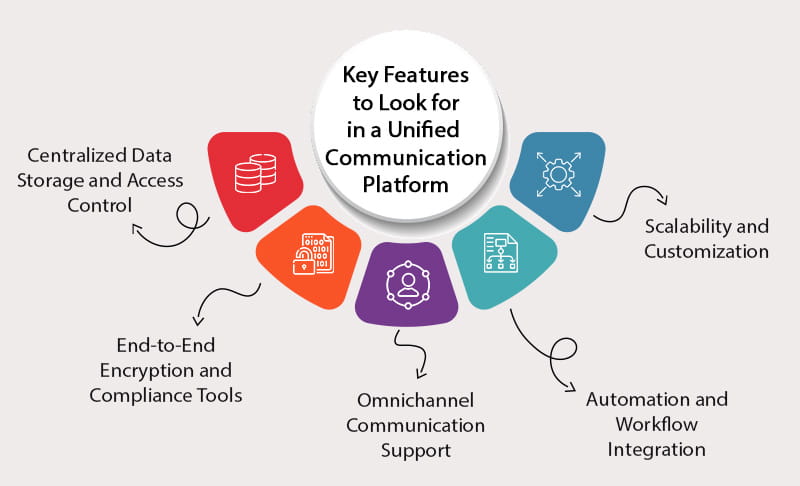
Key Features to Look for in a Unified Communication Platform
Centralized Data Storage and Access Control
Look for platforms that offer consolidated data repositories with tiered access controls. This ensures secure, role-based access while supporting GDPR’s “right to access” and “right to be forgotten” mandates.
End-to-End Encryption and Compliance Tools
Robust encryption protocols - both in transit and at rest - are essential. Also, ensure the platform includes built-in GDPR compliance features like audit logs, consent tracking, and breach notifications.
Omnichannel Communication Support
A truly unified system should support email, chat, video, voice, and even social channels within a single interface. This reduces tool-switching and streamlines customer engagement.
Automation and Workflow Integration
Look for AI-enabled automation to route queries, manage tickets, and handle repetitive tasks. Workflow integrations with CRM, ERP, and analytics tools can further improve efficiency.
Scalability and Customization
The platform should be customizable to fit your business structure and scalable as you grow. From startups to enterprises, the solution should evolve with your needs.
Steps to Migrate from Multiple Systems to One
Conduct a Comprehensive Communication Audit
Start by mapping out your current tools and their use cases across departments. Identify overlaps, inefficiencies, and critical functionalities that must be retained post-consolidation.
Involve Key Stakeholders Early
From IT and compliance to marketing and support, get buy-in from all departments. Their input will ensure the new system aligns with both operational needs and regulatory requirements.
Choose the Right Technology Partner
Your vendor should offer more than just technology - they should provide expertise in data migration, user training, and GDPR compliance. Look for partners with a proven track record in secure digital transformation.
Develop a Data Migration and Integration Plan
Plan meticulously for data migration, ensuring secure transfer and minimal downtime. Pay special attention to data classification and retention policies to stay GDPR-compliant during the transition.
Roll Out in Phases with Continuous Training
Adopt a phased rollout to iron out technical snags and gather feedback. Simultaneously, offer ongoing training to ensure user adoption and minimize resistance.

Maintaining GDPR Compliance in a Unified System
Regular Data Audits and Access Reviews
Implement scheduled audits to assess data flow, storage, and access permissions. This helps uncover vulnerabilities and ensures you remain within GDPR boundaries.
Consent Management and Transparency
Ensure that the new system allows for transparent consent capture, management, and withdrawal. Customers should be able to access, modify, or delete their data easily.
Incident Response and Breach Protocols
Have well-documented breach detection and reporting mechanisms in place. GDPR mandates notifying authorities within 72 hours of a breach - being unprepared isn’t an option.
Staff Training and Awareness
Technology alone isn't enough. Conduct regular GDPR training sessions for employees to reinforce data handling best practices and platform-specific compliance features.
Documented Data Retention Policies
Define and automate data retention and deletion policies in line with GDPR. This ensures you're only holding onto customer data as long as necessary, minimizing risk.
How Espire Helps Businesses Stay GDPR Compliant
End-to-End Communication Platform Implementation
At Espire, we help enterprises consolidate their communication tools into a single, secure, and intelligent platform. This minimizes complexity while improving efficiency and compliance readiness from the ground up.
Data Governance and Privacy by Design
Our solutions are built with data protection principles embedded right into the architecture. From role-based access to customizable retention policies, we design for compliance at every stage.
Seamless Integrations with Legacy Systems
We understand that a complete rip-and-replace strategy isn't always feasible. Espire offers integration and orchestration capabilities to unify data and workflows across existing platforms, while ensuring GDPR compliance.
Continuous Monitoring and Risk Mitigation
Our approach doesn’t end at deployment. We offer real-time monitoring, audit trails, and risk assessment dashboards to help you proactively identify and address compliance gaps.
Training and Change Management Support
Espire’s support goes beyond technology. We provide tailored training and user onboarding sessions that empower your workforce to confidently use the new platform while respecting data privacy laws.
Conclusion: Simplify, Streamline, and Stay Secure
In today’s hyper-connected world, using five different communication systems is not just inefficient—it’s risky. By consolidating into a unified, intelligent platform, you not only improve collaboration and customer satisfaction but also strengthen your data privacy posture. The key lies in choosing a solution that is designed with GDPR in mind and supported by a partner who understands both technology and compliance intricacies.
Espire brings the tools, expertise, and strategic insight you need to eliminate complexity while staying fully compliant in a regulated digital environment. It’s time to move from fragmented to future-ready.